Pioneering medical laser technology for 35+ years. Request a Demo
Innovation

Lumenis Innovation: Where Laser Science Meets Clinical Need

Three decades of R&D investment have produced platforms that changed how practitioners treat scars, remove hair, and perform minimally invasive surgery. Here's how we approach the process.

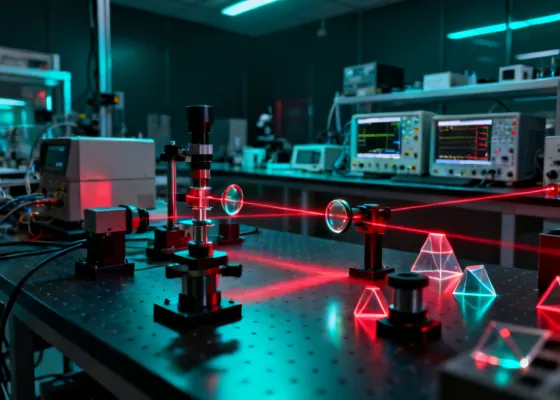
Lumenis laser research and development laboratory

Research-Driven, Clinician-Validated

Our R&D process begins with a clinical problem, not a technology looking for an application. Every platform we develop starts with conversations with practitioners who face real treatment limitations. From there, our team of physicists and biomedical engineers develops prototypes, runs preclinical studies, and iterates based on measurable outcomes before any device reaches a clinical setting.

This process is slower than simply repackaging existing laser modules. However, it produces platforms like SCAAR FX (which required years of development to achieve controlled deep dermal remodeling) and MOSES technology (co-developed with urologists to solve specific limitations in holmium lithotripsy).

280+ R&D Engineers
$40M+ Annual R&D Investment
Proprietary Technologies

Technologies developed in-house that differentiate Lumenis platforms from commodity laser hardware.

SCAAR FX

Synergistic Coagulation and Ablation for Advanced Resurfacing. Delivers focused CO2 energy at 10,600nm wavelength to the deep reticular dermis (up to 4mm penetration depth) through a fractional pattern, triggering neocollagenesis at depths not reachable by conventional fractional systems that typically penetrate 1.0-1.6mm. Developed specifically for burn scar and traumatic scar revision. Clinical validation published in the Journal of Drugs in Dermatology (2016) and Lasers in Surgery and Medicine (2017) demonstrated statistically significant scar improvement using Vancouver Scar Scale assessment.

MOSES Technology

A pulse modulation technology for holmium (Ho:YAG, 2100nm) laser lithotripsy that splits the laser pulse into two sequential components: the first creates a vapor bubble, and the second delivers energy directly to the stone through that bubble, minimizing retropulsion (stone movement away from the fiber). Co-developed with practicing urologists and validated in a prospective multicenter study published in the Journal of Urology (2019), which reported a 25% reduction in procedure time and improved stone-free rates compared to conventional holmium settings at equivalent energy levels (0.5-1.5J per pulse, 10-20Hz).

Optimal Pulse Technology

The IPL pulse-shaping system in the M22 platform that delivers square-shaped light pulses rather than the spiked pulses typical of conventional IPL systems. Square pulses maintain consistent fluence throughout the pulse duration, which provides more uniform energy delivery to the target chromophore and reduces the risk of epidermal damage from fluence spikes.

Three Decades of Milestones

1991

Company Founded

Established with a mission to develop clinical laser platforms grounded in laser-tissue interaction science. Initial focus on ophthalmic laser systems.

1997

LightSheer Diode Laser Launched

Introduced the first high-power diode laser system specifically engineered for hair removal, establishing the 800nm diode as the reference standard for the indication.

2004

UltraPulse CO2 Platform

Released the UltraPulse fractional CO2 system with unique pulse control allowing both ablative and fractional treatment modes on a single platform.

2012

M22 Multi-Platform Introduced

Launched the modular M22 system combining IPL, Nd:YAG, ResurFX, and Q-Switched modules on a single base unit. Now has 30+ FDA-cleared indications.

2017

MOSES Technology for Lithotripsy

Introduced the pulse modulation technology for holmium laser stone treatment, developed in collaboration with urologists to address stone retropulsion.

2024

Next-Generation Platform Development

Continued investment in AI-assisted treatment parameter optimization and new wavelength combinations for expanded clinical applications.

280+

Patents Granted

Protecting innovations across laser source design, pulse modulation, optical delivery, and treatment protocols. Our patent portfolio reflects genuine technical differentiation, not incremental filing strategies.

500+

Clinical Publications

Peer-reviewed studies validating Lumenis platform efficacy, safety profiles, and clinical outcomes. We prioritize independent research over manufacturer-sponsored studies, though both exist in our publication database.

Medical Laser Technology Comparison

Understanding the clinical trade-offs between laser and light-based platforms helps practitioners make informed procurement decisions. No single technology suits every indication.

Parameter CO2 Fractional (UltraPulse) Diode 805nm (LightSheer) IPL Multi-Filter (M22) Nd:YAG 1064nm
Wavelength 10,600nm 805nm 515-1200nm (broadband) 1064nm
Primary Chromophore Water (tissue ablation) Melanin (follicular) Melanin, oxyhemoglobin Oxyhemoglobin (deep)
Penetration Depth Up to 4mm (SCAAR FX mode) 3-4mm (follicular target) 1-3mm (filter dependent) 4-6mm
Skin Type Suitability Fitzpatrick I-III (IV-VI with caution) Fitzpatrick I-VI Fitzpatrick I-IV (V-VI limited) Fitzpatrick I-VI
Primary Indications Scar revision, resurfacing, rejuvenation Hair removal (all body areas) Vascular, pigment, acne, photodamage Deep vascular lesions, hair removal (dark skin)
Downtime 5-14 days (mode dependent) Minimal (0-1 day) 0-3 days (indication dependent) 0-3 days
Key Limitation PIH risk in darker skin; longer recovery Not effective on light/gray hair Higher PIH risk in skin types V-VI Lower melanin absorption; may need more sessions
Typical Treatment Speed 30-60 min (full face) 15 min (full back with HS handpiece) 20-40 min (full face) 20-45 min (treatment dependent)

Note: Treatment times, outcomes, and skin type suitability vary based on individual patient characteristics, operator experience, and specific treatment parameters. The comparison above reflects typical clinical parameters under standard conditions. Competitor platforms (e.g., Cynosure Elite iQ at 755nm/1064nm, Cutera Excel HR at 755nm/1064nm, and Sciton JOULE with Halo at 1470nm/2940nm) offer different wavelength combinations that may suit specific clinical needs. Platform selection should be based on patient demographics, target indications, and business model.

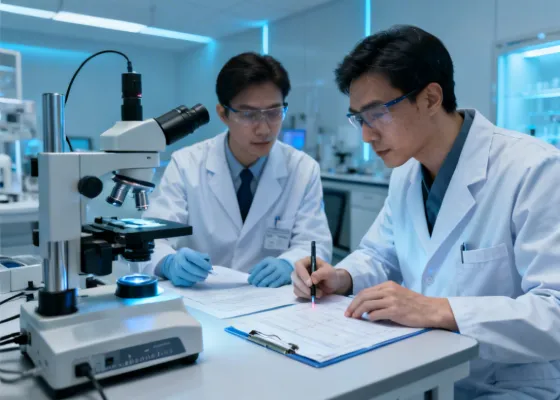
Lumenis clinical validation and testing process

How We Validate Performance Claims

Every clinical claim Lumenis makes follows a structured validation pathway. We do not publish performance data based solely on internal benchmarks.

  • Bench testing: Laboratory measurement of power output, beam profile, pulse duration, and wavelength stability under controlled ambient conditions (22°C, 45% RH). Equipment calibrated per ISO 11554:2017 for laser power measurement.
  • Preclinical studies: Ex-vivo tissue models (porcine skin and kidney stone phantoms) to validate thermal profiles, ablation depths, and energy delivery before human exposure.
  • Clinical trials: IRB-approved protocols with defined endpoints. Scar studies use Vancouver Scar Scale (VSS) and Patient and Observer Scar Assessment Scale (POSAS). Lithotripsy studies measure stone-free rates and procedure time under fluoroscopic guidance.
  • Independent replication: Post-market clinical publications by non-affiliated practitioners. Over 500 publications reference Lumenis platforms, with the majority conducted at independent academic institutions.

Practitioners can request access to specific clinical study summaries, FDA 510(k) clearance documents, and the complete publication database through our clinical affairs team. We also offer complimentary on-site demonstrations with your own patient cases to verify platform suitability before purchase.

Interested in Our Technology Roadmap?

Connect with our clinical technology team to discuss upcoming platform developments and how they align with your practice direction.

Connect With Our R&D Team